Summer Training 2025
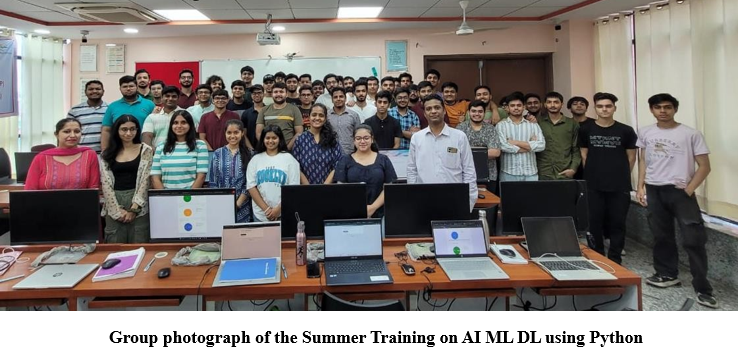
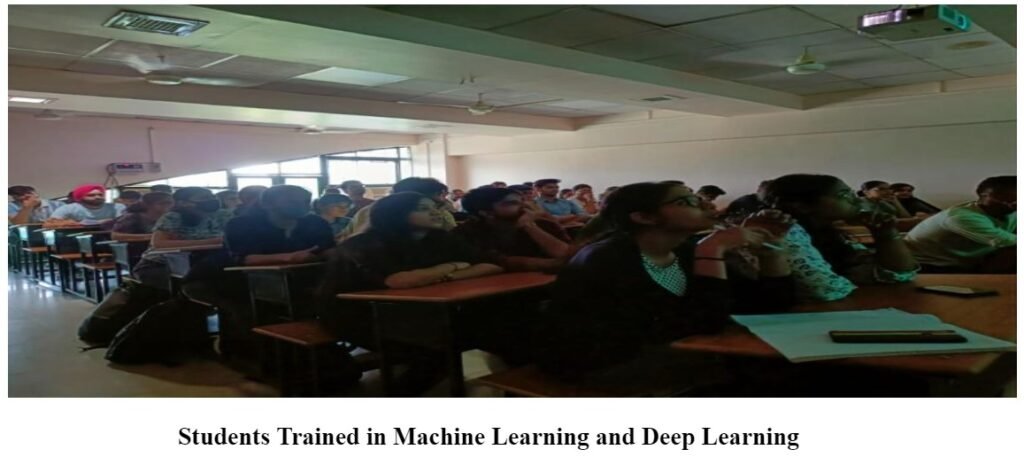
AI, ML, and DL using Python
Training Duration: 23rd June 2025 – 25th July 2025
Training Topic: AI, ML, and DL using Python
Subject Code: ES 361
Class: B.Tech. III Year
Faculty Instructors
- Dr. Arun Kumar Dubey
- Dr. Achin Jain
- Ms. Neha Gupta
- Dr. Payal Malik
- Ms. Neha Sharma
Course Overview
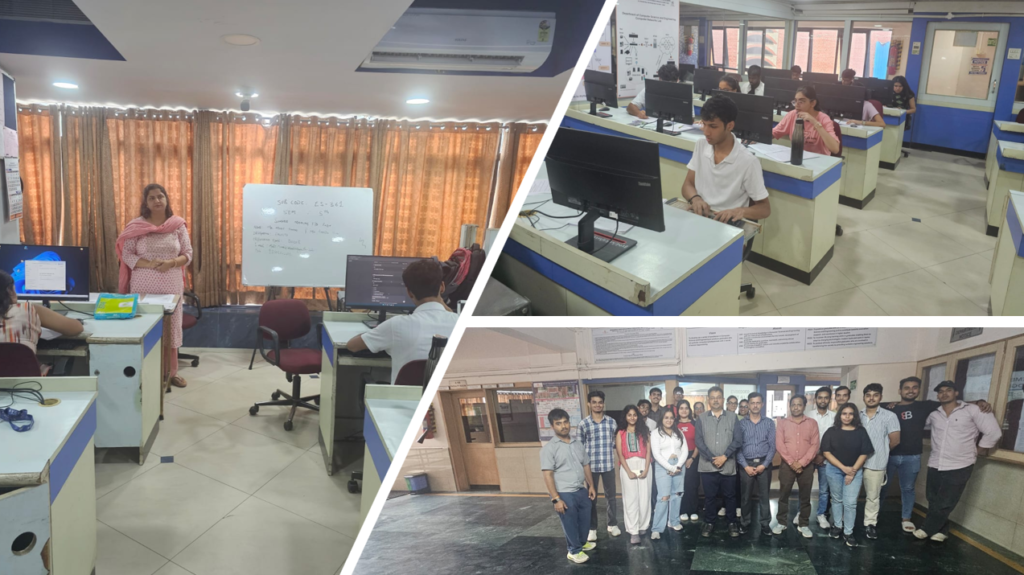
This training program is designed to help students master skills in Artificial Intelligence, Machine Learning, and Deep Learning. The students gained hands-on experience by working on real-world AI projects.
Objectives of the Training
- Educate on Key Concepts: Participants will learn about the fundamental concepts of AI and ML, including data processing, model building, and ethical considerations.
- Practical Skills: Training aims to equip participants with practical skills to apply AI/ML concepts in real-world scenarios.
- Hands-On Experience: Interactive sessions and live demonstrations allow participants to gain hands-on experience with AI/ML tools and technologies.
- Real-World Applications: Training covers various applications of AI and ML across different industries, providing insights into how these technologies can be utilized.
These objectives ensure that students are well-prepared to leverage AI and ML in their professional endeavors and to contribute to the ongoing advancements in these fields.
Skills Acquired
- Python Fundamentals: Core concepts such as functions, strings, lists, tuples, sets, loops, and conditional statements.
- Statistical and Visualization Libraries: Hands-on experience with NumPy, Pandas, Matplotlib, and exposure to visualization platforms.
- Machine Learning Algorithms:
- Supervised Learning: Linear regression, logistic regression, support vector machines, decision trees, and random forests.
- Unsupervised Learning: K-means clustering.
- Deep Learning Architectures: ANN, DNN, CNN, RNN, LSTM, GRU, with discussions on loss functions, optimizers, and key hyperparameters.
Conclusion
Students applied ML and DL techniques to real-world problems, showcasing their understanding and technical skills through practical project work.

Electric Vehicle and Battery Management Systems
Coordinators: Dr. Bharat Singh and Dr. Ashutosh Gupta
Training Duration: 23rd June 2025 – 25th July 2025
Training Topic: Electric Vehicle and Battery Management Systems
Subject Code: ES 361
Class: B.Tech. III Year
Course Overview
The program aimed to build a strong foundation in electric vehicle technology and encourage interdisciplinary learning in the field of sustainable transportation.
Objectives of the Training
To equip students with the fundamentals and advancements in electric mobility, the program focused on EV architecture, lithium-ion battery technology, and BMS design and operation.
Skills Acquired
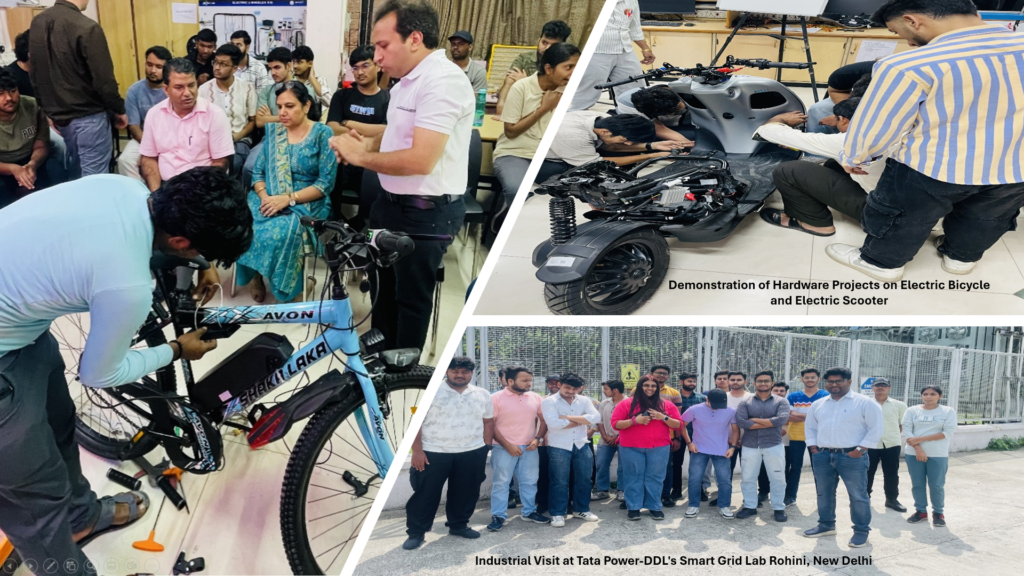
The successful conversion of a mechanical bicycle into an electric cycle using a 250W, 36V BLDC hub motor, a Li-ion battery pack (14S3P configuration), and essential control components including a sine-wave motor controller, Pedal Assist Sensor (PAS), throttle, Battery Management System (BMS), and e-brake levers. This hands-on project enabled students to understand the integration and functioning of electric drivetrain components. In addition, students explored the control and wiring systems of an electric scooter (Bajaj Chetak 3503), gaining real-time experience in EV subsystem coordination. The program also covered key BMS functionalities such as SOC/SOH estimation, temperature and voltage monitoring, fault detection, thermal management, and cell balancing techniques, supported by circuit simulations and modeling exercises. Various BMS architectures—centralized, modular, and distributed—along with relevant safety protocols and industry standards were discussed.
Conclusion
The training provided an in-depth blend of theoretical knowledge and practical exposure to the core components of electric mobility. Complementing the technical sessions, an industrial visit to Tata Power-DDL’s Smart Grid Lab in Rohini on 18th July 2025 provided practical insights into smart energy systems and their integration with EV charging infrastructure. A total of 19 students from various engineering branches participated in the training, gaining both theoretical insights and hands-on experience through practical sessions, component integration projects, and simulation-based learning. Overall, the program significantly enhanced students’ understanding of electric vehicle technology and battery management systems, and sparked a deeper interest in pursuing opportunities within the EV domain.
Data Science & Data Analytics (DSDA)
Subject Code: ES 361
Class: B.Tech. III Year
Trainers: Mr. Harshit Gaur & Ms. Simran Kaur
Duration: 23rd June 2025 – 25th July 2025
1. Objective
The training program aimed to provide an integrated understanding of Data Science and Data Analytics, with practical exposure to tools such as Power BI, Python, TensorFlow, and Keras. It was designed to prepare students for real-world data handling, visualization, and machine learning tasks.
2. Program Structure
A. Data Analytics Module
Key topics covered:
- Introduction to Data Analytics: Types of analytics, data lifecycle, and transformation.
- SQL for Data Handling: CRUD operations, joins, filtering, and aggregation.
- Power BI: Setup, data transformation, data modeling, DAX, visualizations, and report publishing.
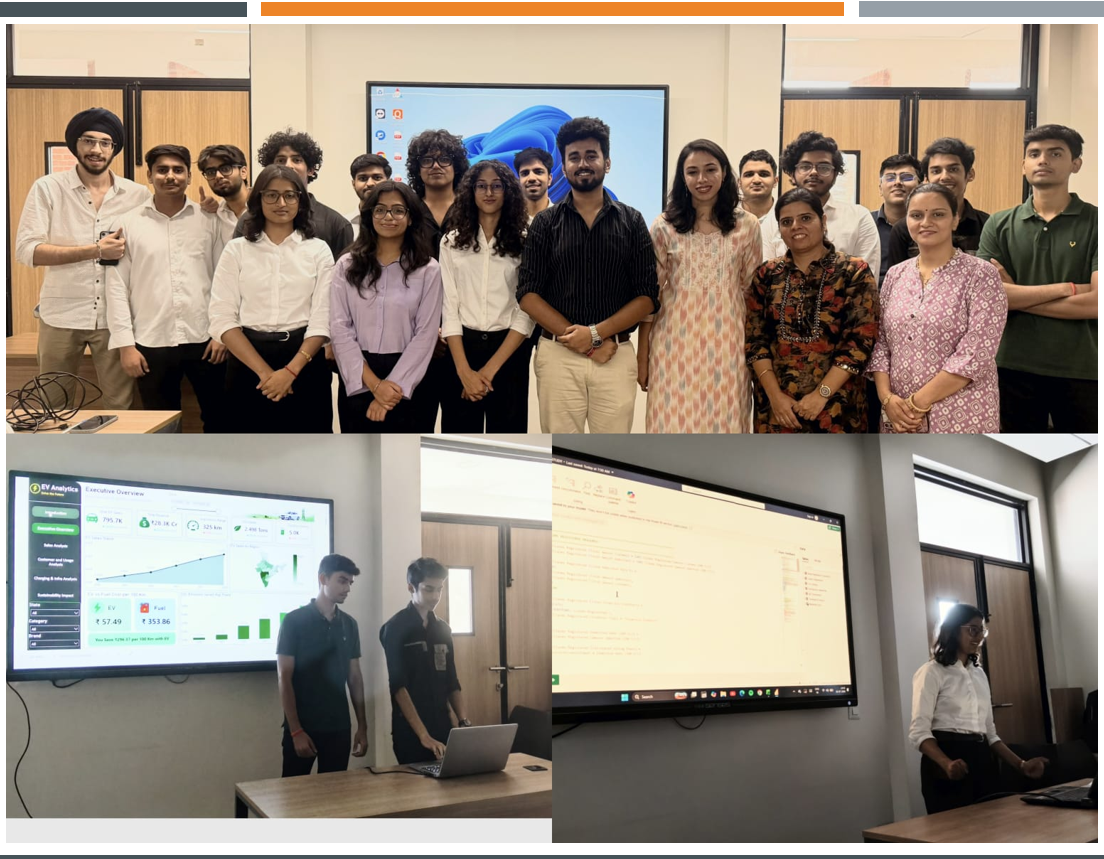
- Dashboard Storytelling: Students created dashboards from real-world datasets and presented insights.
Dates: 23rd June – 7th July 2025
Highlights:
- Hands-on SQL and Power BI practice.
- Focus on business intelligence and storytelling through visuals.
- Final dashboard presentations by students to showcase learning.
B. Data Science Module
Key topics included:
- Python for ML: Basics, lambda functions, scikit-learn introduction.
- ML Algorithms: KNN, Random Forest, feature scaling, and cross-validation.
- Natural Language Processing (NLP): NLTK, TF-IDF, sentiment analysis.
- Deep Learning: Introduction to neural networks, CNNs, TensorFlow & Keras.
- Capstone Projects:
- Text Generation using NLP
- Generative AI-based applications
- CNN-based image analysis project
Dates: 8th July – 25th July 2025
Highlights:
- Hands-on model building using Keras and TensorFlow.
- End-to-end project implementations.
- Real-world dataset use in project-based learning.
3. Methodology
- Theory + Practice: Each topic was taught using 2 hours of lecture followed by 2 hours of lab work.
- Interactive Sessions: Incorporated live demos, coding exercises, and group discussions.
- Resource Sharing: Students accessed curated reading materials, YouTube tutorials, cheat sheets, and official documentation.
- Outcome-Oriented: Each module concluded with mini-projects and presentations to assess understanding.
4. Learning Outcomes
By the end of the program, students were able to:
- Understand the full data pipeline from ingestion to visualization.
- Create impactful dashboards using Power BI.
- Build machine learning and deep learning models.
- Apply data analytics to business problems and real-world datasets.
- Work collaboratively on data-centric projects and present findings.
5. Conclusion
The Summer Training in DSDA was a well-structured, hands-on learning experience that bridged theoretical knowledge with industrial tools and practices. The integration of analytics with data science, supported by practical assignments and project work, ensured a holistic learning journey for the students. It significantly enhanced their readiness for careers in data science, business intelligence, and AI.
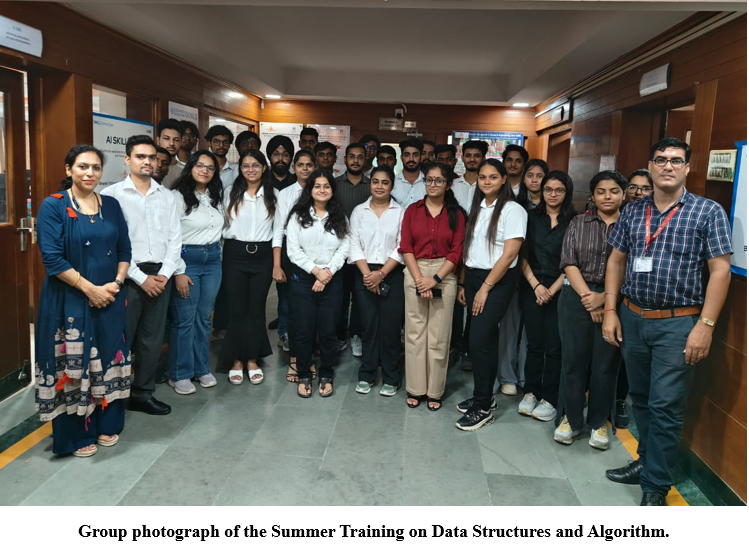
Data Structures and Algorithms (DSA)
In Collaboration with Coding Ninjas Pvt. Ltd.
Coordinators: Dr. Ajay Dureja & Dr. Shelya
Training Duration: 23rd June 2025 – 25th July 2025
Training Topic: Data Structures and Algorithms (DSA)
Subject Code: ES 361
Class: B.Tech. III Year
Course Overview
Data Structures and Algorithms (DSA) form the cornerstone of efficient programming and software development. A strong grasp of DSA enhances problem-solving abilities and logical thinking—critical skills for addressing real-world challenges in the tech industry.
Objectives of the Training
The program was designed to benefit both beginners and advanced learners, strengthening their core programming concepts. It prepared students for coding competitions, technical interviews, and real-world software development.
Skills Acquired
- Problem-Solving Techniques
- Object-Oriented Programming (OOP)
- Arrays and Linked Lists
- Trees and Graphs
- Dynamic Programming
Conclusion
By the end of the course, participants developed:
- Proficiency in writing efficient and optimized code
- A deeper understanding of algorithmic thinking
- Awareness of memory management and performance optimization
This training empowered students to become confident problem solvers and future-ready developers.
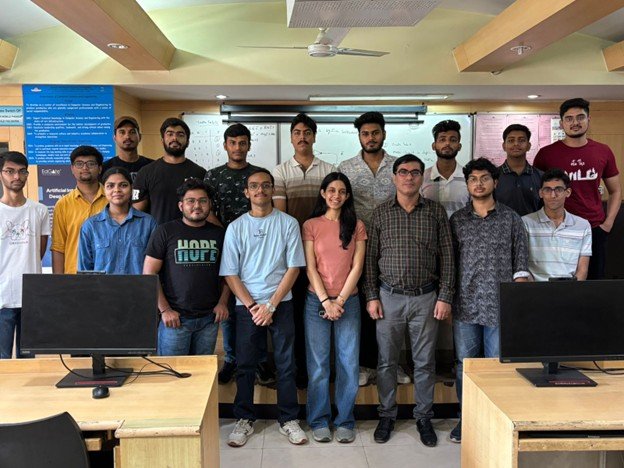
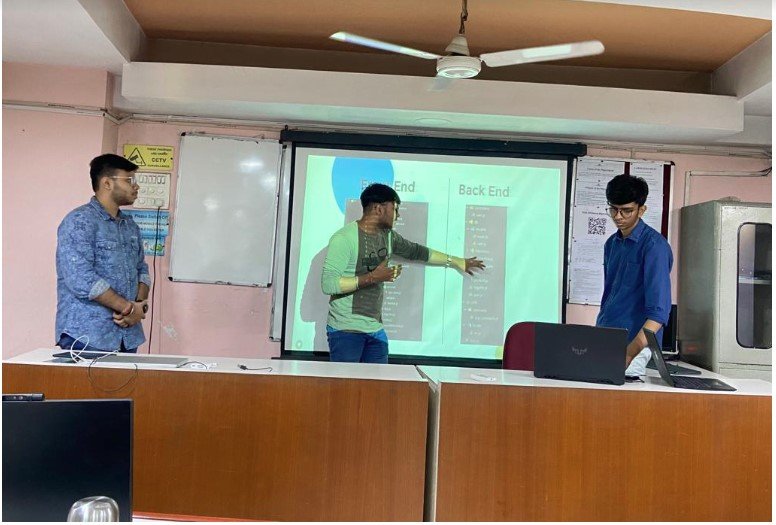
MERN
Organized By: Brain Mentors Pvt. Ltd.
In Association with: Bharati Vidyapeeth’s College of Engineering (BVP), New Delhi
Training Duration: 23rd June 2025 – 25th July 2025
Training Topic: Full Stack Development using MERN + AI Integration
Subject Code: ES 361
Class: B.Tech. III Year
Course Overview
This summer training program was conducted to equip engineering students with hands-on skills in MERN Stack (MongoDB, Express.js, React.js, Node.js) and AI Integration, enabling them to build real-world full-stack applications enhanced by artificial intelligence.
Objectives of the Training
- Build responsive web apps using MERN stack
- Understand frontend-backend architecture
- Create and consume REST APIs
- Integrate Python-based AI models with Node/React
- Host projects using cloud platforms (Vercel, Render, AWS)
- Collaborate using Git & GitHub
Skills Acquired
- Full Stack Web Development
- React & Node.js Integration
- MongoDB Modeling
- RESTful API design
- AI Integration with Python
- Git & GitHub Workflow
- Cloud Deployment and CI/CD Basics
Conclusion
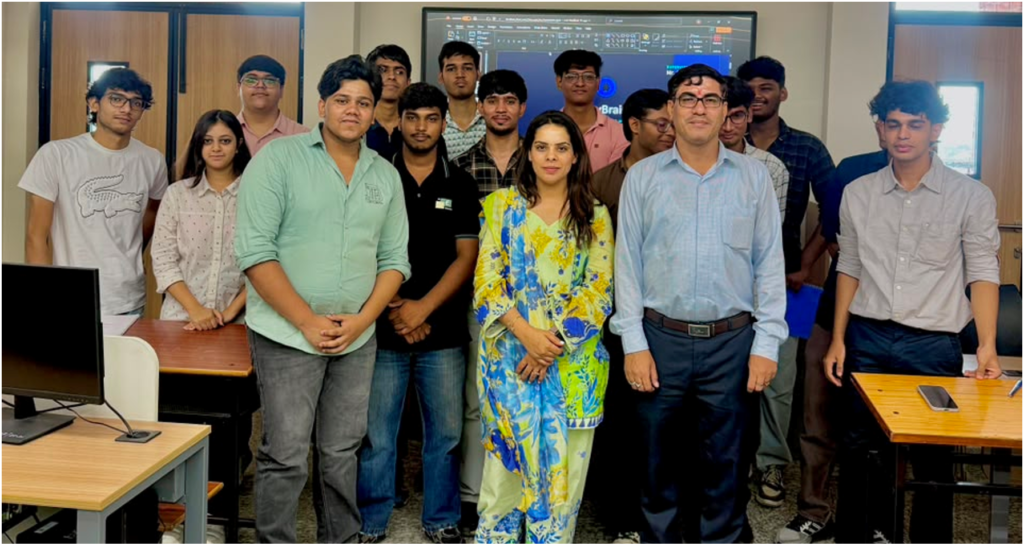
This 5-week summer training organized by Brain Mentors provided a project-driven, real-world learning experience for B.Tech students of BVP. Students not only strengthened their MERN stack foundations but also gained hands-on exposure to integrating AI modules into full-stack applications—making them industry-ready for future placements and internships.
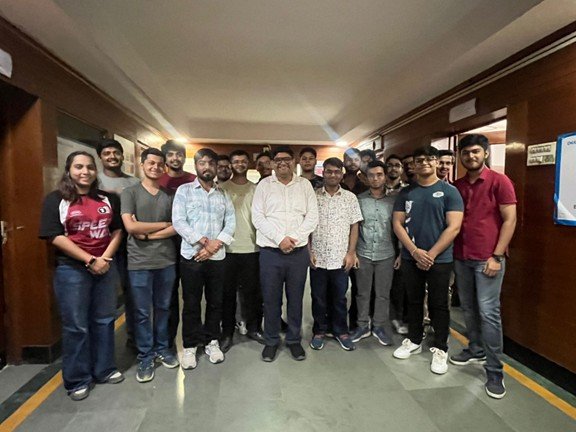
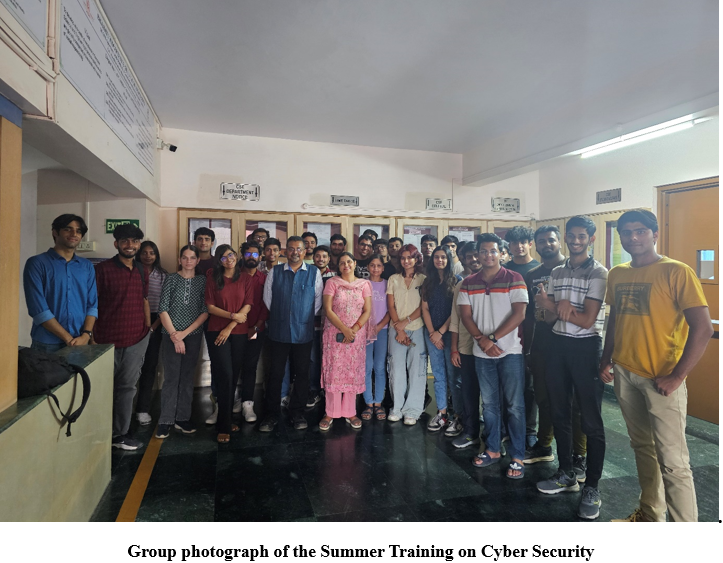
Cyber Security in Linux
Class: B.Tech. III Year
Duration: 23rd June 2025 – 26th July 2025
Trainers: Mr. Mohit Tiwari & Ms. Amrita Ticku
Objective
The training program aimed to provide students with a comprehensive understanding of Linux system administration, networking fundamentals, and cybersecurity practices. The objective was to equip participants with the skills required to secure systems, analyze vulnerabilities, and implement practical security measures using Linux-based environments.
Program Structure
The program was delivered in a modular 5-week format, combining theory with extensive hands-on practice.
- Networking Fundamentals: TCP/IP, addressing, services, and configuration.
- System Administration: Superuser privileges, process control, booting, and shutdown.
- Linux Installation & Configuration: File systems, partitions, loaders, and package management.
- User & Group Management: Authentication, permissions, and environment setup.
- Linux File System & Processes: Mounting, inode structures, and automation.
- Troubleshooting: Boot issues, GRUB/LILO problems, system logs.
- Cyber Security Core:
- Reconnaissance and information gathering
- DNS, SSL/TLS, hashing & encryption techniques
- Virtual machines and secure system configuration
Methodology
- Blended Learning: Conceptual lectures followed by lab-based practice.
- Hands-on Training: Real-world simulations using Linux terminals, virtual machines, and penetration testing tools.
- Problem-Solving Approach: Troubleshooting scenarios and security use cases.
- Collaborative Learning: Group tasks to configure secure systems and analyze vulnerabilities.
Learning Outcomes
- Configure and manage Linux systems effectively.
- Perform basic to advanced network and system troubleshooting.
- Understand and apply cybersecurity fundamentals for securing Linux environments.
- Identify, analyze, and mitigate common web application vulnerabilities.
- Deploy and test encryption, hashing, and authentication mechanisms.
- Work with virtualized environments to simulate real-world security challenges.
Conclusion
The Summer Training on Cyber Security in Linux provided participants with both foundational system administration skills and applied security knowledge. The combination of Linux internals, networking concepts, and cybersecurity practices offered a holistic learning experience. Students gained hands-on expertise in identifying threats, mitigating vulnerabilities, and implementing secure configurations skills highly relevant to today’s cybersecurity landscape. This training significantly strengthened their technical competencies, preparing them for future roles in system administration, cybersecurity analysis, and ethical hacking.