INTRODUCTION TO SOFTWARE ENGINEERING (ISE) LAB (OCSE‐413P)
Introduction
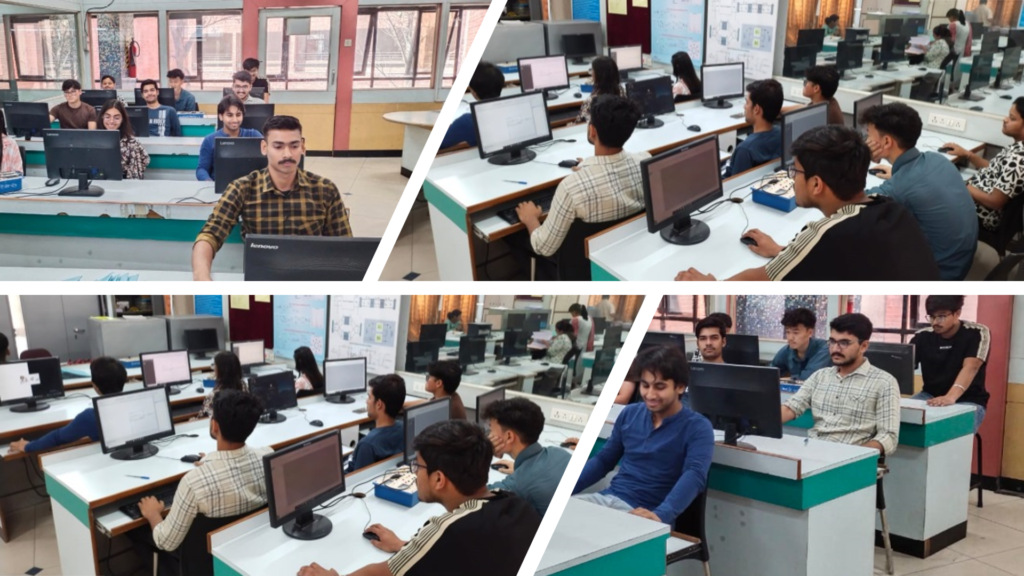
The Introduction to Software Engineering Laboratory at the Department of Electronics and Communication Engineering, Bharati Vidyapeeth’s College of Engineering, New Delhi, provides students with practical exposure to software development methodologies and tools. The lab helps students understand different phases of the Software Development Life Cycle (SDLC) such as requirement analysis, design, testing, and maintenance.
Through practical exercises, students learn requirement engineering techniques, software project planning, design approaches, testing methods, and maintenance practices. The laboratory bridges the gap between theoretical concepts and real-world software development practices, preparing students for professional careers in the software and IT industry.
Course Objectives
| COB-1 |
To introduce the basic concepts of the software development process, software requirements, and specifications |
| COB-2 |
To impart knowledge of Software project planning and various software design techniques for developing large software systems |
| COB-3 |
To understand Software Metrics, Software Reliability, and Quality Assurance using ISO9001 and SEI-CMM |
| COB-4 |
To impart the knowledge and use of software engineering processes and tools in analysis, design, implementation, software testing, documentation, and maintenance for software systems |
Course Outcomes
| CO |
Statement |
Bloom’s Level |
| OCSE‐413P.1 |
Remember and understand the basic concepts of the software development processes, Software requirements and specifications. |
Remember, Understand |
| OCSE‐413P.2 |
Apply knowledge of Software Project Planning and various Software design techniques for developing large software systems. |
Apply |
| OCSE‐413P.3 |
Understand Software Metrics, Software Reliability, and Quality assurance using ISO 9001 and SEI‐CMM. |
Understand |
| OCSE‐413P.4 |
Impart the knowledge and use of software engineering processes and tools to apply, create and evaluate different software systems. |
Apply, Create and Evaluate |
CO-PO-PSO Mapping
| CO/PO |
PO1 |
PO2 |
PO3 |
PO4 |
PO5 |
PO6 |
PO7 |
PO8 |
PO9 |
PO10 |
PO11 |
PO12 |
PSO1 |
PSO2 |
| OCSE‐413P.1 |
3 |
2 |
2 |
2 |
3 |
– |
– |
– |
3 |
2 |
2 |
3 |
1 |
1 |
| OCSE‐413P.2 |
3 |
2 |
2 |
2 |
3 |
– |
– |
– |
3 |
2 |
2 |
3 |
1 |
1 |
| OCSE‐413P.3 |
3 |
2 |
2 |
2 |
3 |
– |
– |
– |
3 |
2 |
2 |
3 |
1 |
1 |
| OCSE‐413P.4 |
3 |
2 |
2 |
2 |
3 |
– |
– |
– |
3 |
2 |
2 |
3 |
1 |
1 |
 Facilities
Operating System / Software
| Sr. No. |
Name |
Version |
| 1. |
Windows |
10 |
| 2. |
Star UML |
Open |
Hardware
| Sr.No. |
Equipment Name |
Specification |
Quantity |
| 1. |
Computer |
Intel Core (i7) 14900, RAM-32GB, 3.20 GHz |
07 |
| 2. |
Computer |
Intel Core (i5) 4th Generation 2.90 GHz, RAM-16GB |
4 |
| 3. |
Printer |
HP Laser Jet Pro P1108 Plus |
01 |
Staff
- Lab Incharge: Dr. Yogita Arora
- Other Faculty Members: Dr. Neera Agarwal
- Lab Assistant: Mr. Aniket Pawar