Introduction to IoT LAB
Introduction
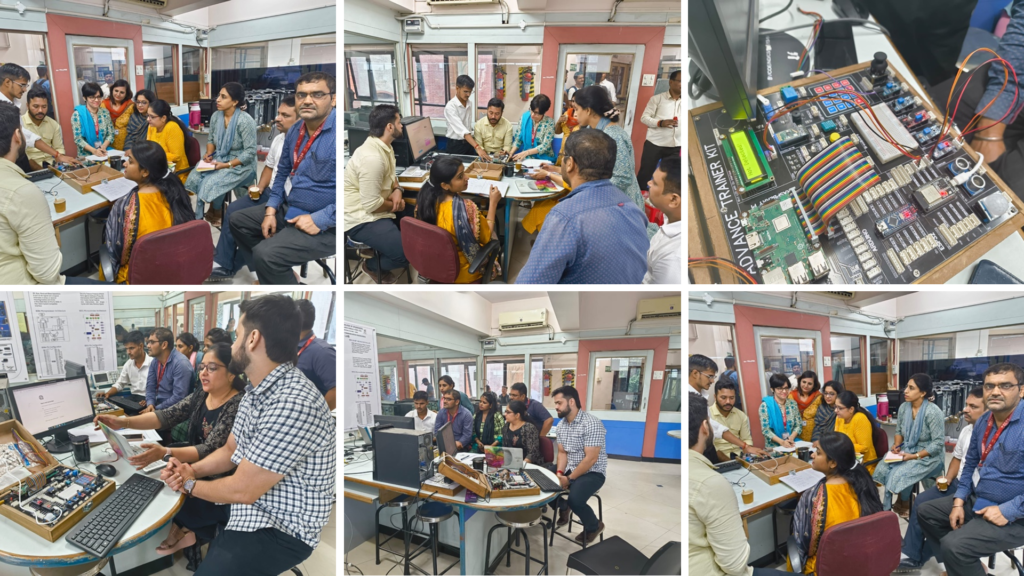
The Introduction to Internet of Things (IoT) Laboratory provides practical exposure to the fundamental concepts and technologies used in building IoT-based systems. The Internet of Things refers to a network of interconnected physical devices embedded with sensors, software, and communication capabilities that enable them to collect, exchange, and process data over the internet. Through this laboratory, students gain hands-on experience with embedded computing platforms such as Raspberry Pi and learn how to interface hardware components like LEDs, switches, sensors, and relays with software applications. The lab focuses on developing basic programming skills using Python, executing Linux commands, and understanding device communication in a networked environment. Students perform experiments such as controlling LEDs, reading inputs from switches, implementing time-based operations using cron, and sending sensor data to the cloud for remote monitoring and control. These activities help bridge the gap between theoretical knowledge and real-world IoT implementations. The laboratory also introduces students to concepts such as device automation, remote access over a Local Area Network (LAN), and cloud-based IoT services. Overall, the IoT lab enables learners to understand how hardware, software, and networking technologies integrate to create intelligent and automated systems used in modern applications like smart homes, healthcare monitoring, industrial automation, and smart cities.
Course Objectives
| COB-1 |
Describe what IoT is and how it works today |
| COB-2 |
Recognise the factors that contributed to the emergence of IoT |
| COB-3 |
Design and program IoT devices |
| COB-4 |
Define the infrastructure for supporting IoT deployments |
Course Outcomes
| CO |
Statement |
Bloom’s Level |
| ECC258.1 |
Demonstrate basic concepts, principles and challenges in IoT. |
Remember and Understand |
| ECC258.2 |
Illustrate functioning of hardware devices and sensors used for IoT |
Evaluate |
| ECC258.3 |
Analyze network communication aspects and protocols used in IoT |
Analyze |
| ECC258.4 |
Apply IoT for developing real life applications using Ardunio programming. |
Apply and Create |
CO-PO-PSO Mapping
| CO/PO |
PO1 |
PO2 |
PO3 |
PO4 |
PO5 |
PO6 |
PO7 |
PO8 |
PO9 |
PO10 |
PO11 |
PO12 |
PSO1 |
PSO2 |
| ECC258.1 |
– |
1 |
– |
– |
– |
1 |
– |
– |
2 |
– |
3 |
– |
2 |
1 |
| ECC258.2 |
1 |
– |
2 |
– |
3 |
– |
– |
– |
– |
1 |
– |
2 |
3 |
3 |
| ECC258.3 |
– |
2 |
2 |
– |
– |
1 |
– |
– |
2 |
– |
– |
2 |
2 |
3 |
| ECC258.4 |
2 |
1 |
– |
– |
2 |
– |
– |
|
– |
1 |
1 |
– |
3 |
3 |
 Facilities
Operating System /Software
| Sr. No. |
Name |
Version |
| 1. |
Arduino IDE, Rasberry pi Imager, Angry IP, VNC Viewer |
Open Source |
Hardware
| Sr.No. |
Equipment Name |
Specification |
Quantity |
| 1. |
Desktop |
i5, 16GB, Windows 10
Intel(R) Core (TM) i5-3330S CPU @ 2.70GHz 2.70 GHz, 16GB RAM |
10 |
| 2. |
Printer |
HP Laser Jet 1022 |
01 |
| 3. |
Internet of Things Lab |
IOT Advance Trainer Kit |
06 |
Staff
- Lab Incharge: Dr. Monica Bhutani
- Other Faculty Members: Ms. Shikha, Dr. Yugnanda, Mr. Bhawanand Jha, Mr. Avinash
- Lab Assistant: Mr. Manish Bhardwaj